
About EGMC
Nepal’s rivers, forests, and airsheds sustain millions of livelihoods and host some of the world’s most biodiverse landscapes, from the alpine forests of the mid-hills to the wetlands of the Terai. These systems are increasingly threatened by resource extraction, rapid urbanization and uneven enforcement of environmental laws leading to declining water quality and seasonal water shortages, worsening urban air quality, and increasing disputes over access and management of natural resources.
This is the foundation of environmental peacebuilding, an approach that integrates natural resource and environmental management into conflict prevention, mitigation and recovery. Rather than treating ecological strain and social conflict as separate problems, it treats them as connected, turning shared environmental challenges into opportunities for collaboration and trust-building between communities, institutions, and the state.
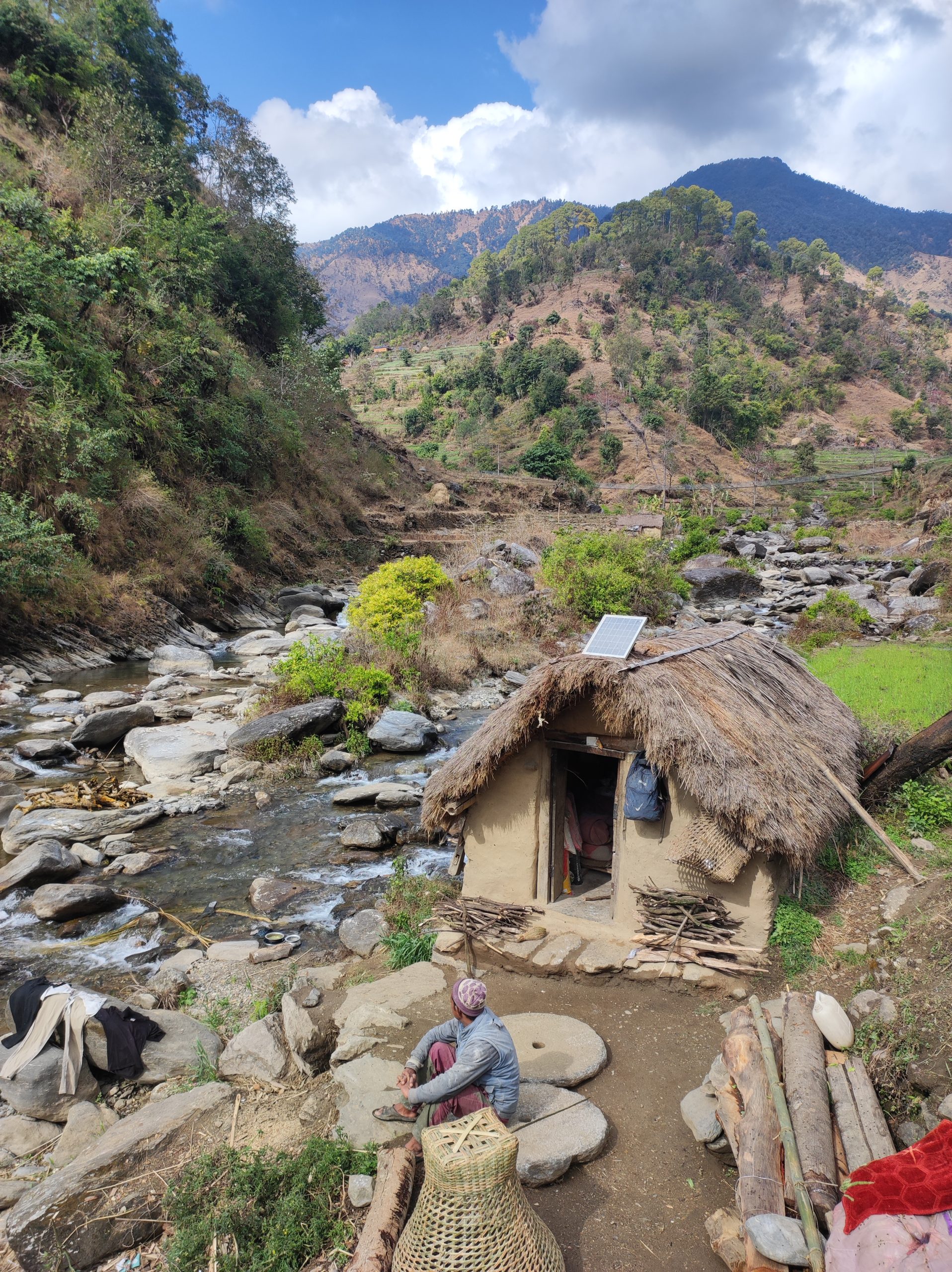
EGMC puts this approach into practice. Established by the Centre for Social Change (CSC), a Nepal-based think-tank, it generates credible, verified evidence on natural resource and environmental conflict across the country. This evidence connects what communities experience on the ground with what policymakers need, built through research, media monitoring, and ongoing stakeholder engagement.
This evidence is especially important since environmental data in Nepal remains largely unpublished, inconsistent, and marked by significant gaps, undermining evidence-based policymaking. Weak data systems, limited institutional capacity, and centralized decision-making leave citizens without a credible, common basis for dialogue on resource and environmental disputes.
Our Core Objectives
EGMC is guided by three core objectives that together turn everyday environmental grievances into evidence, dialogue, and durable solutions:
- Conduct research, media monitoring and field engagement to build a credible evidence base on natural resource and environmental conflict, and translate this into knowledge products and policy recommendations.
- Serve as a trusted link between community grievances and government response, using facilitated dialogue to build accountability and trust.
- Equip youth, teachers, civil society and other stakeholders with the skills and platforms to engage constructively in environmental peacebuilding.
How EGMC Works
EGMC transforms evidence into action through an ongoing cycle of data collection, validation and sharing to guide real dialog and decisions, facilitating a shift in Nepal’s environmental governance from crisis response to sustainable engagement.
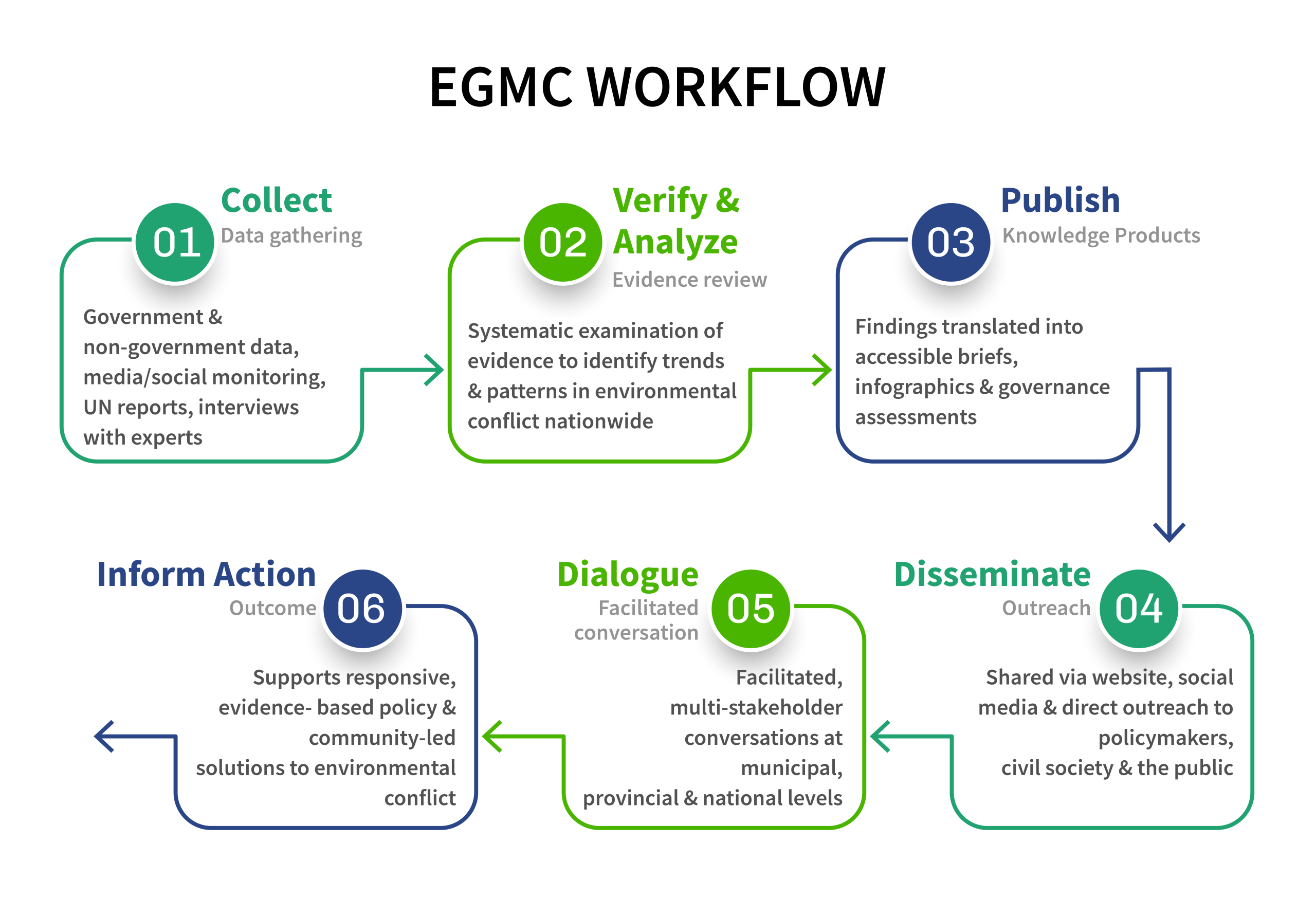
Key Stakeholders
EGMC is built to generate collaboration across generations and sectors. Key actors include:
Actors | Description |
Youth | Trained as active monitors, mappers, and advocates for environmental peacebuilding in their own communities. |
School Teachers | Equipped to integrate environmental peacebuilding into classroom teaching and mentor fellow educators. |
Local, Provincial & Federal Government | Engaged through evidence-based dialogue to strengthen environmental policy and response. |
Civil Society & Development Partners | Engaged as users and amplifiers of EGMC’s evidence and findings. |
Communities | Including indigenous groups and women, whose knowledge and lived experience shape more equitable, sustainable responses to environmental conflict. |
Vision and Strategic Impact
EGMC envisions a Nepal where natural resource and environmental governance is inclusive, transparent, and resilient to conflict. This means moving from reactive crisis response to proactive, evidence-driven dialogue, from local wards to federal institutions. This vision is achieved through youth trained in peacebuilding and green livelihoods, teachers taking these lessons into classrooms, and policymakers prepared with reliable evidence for structured dialog, with progress visible in policies adopted and shifts in government response. Ultimately, EGMC’s work strengthens trust between citizens and the state, turning environmental conflict into an opportunity for cooperation and lasting peace.
