
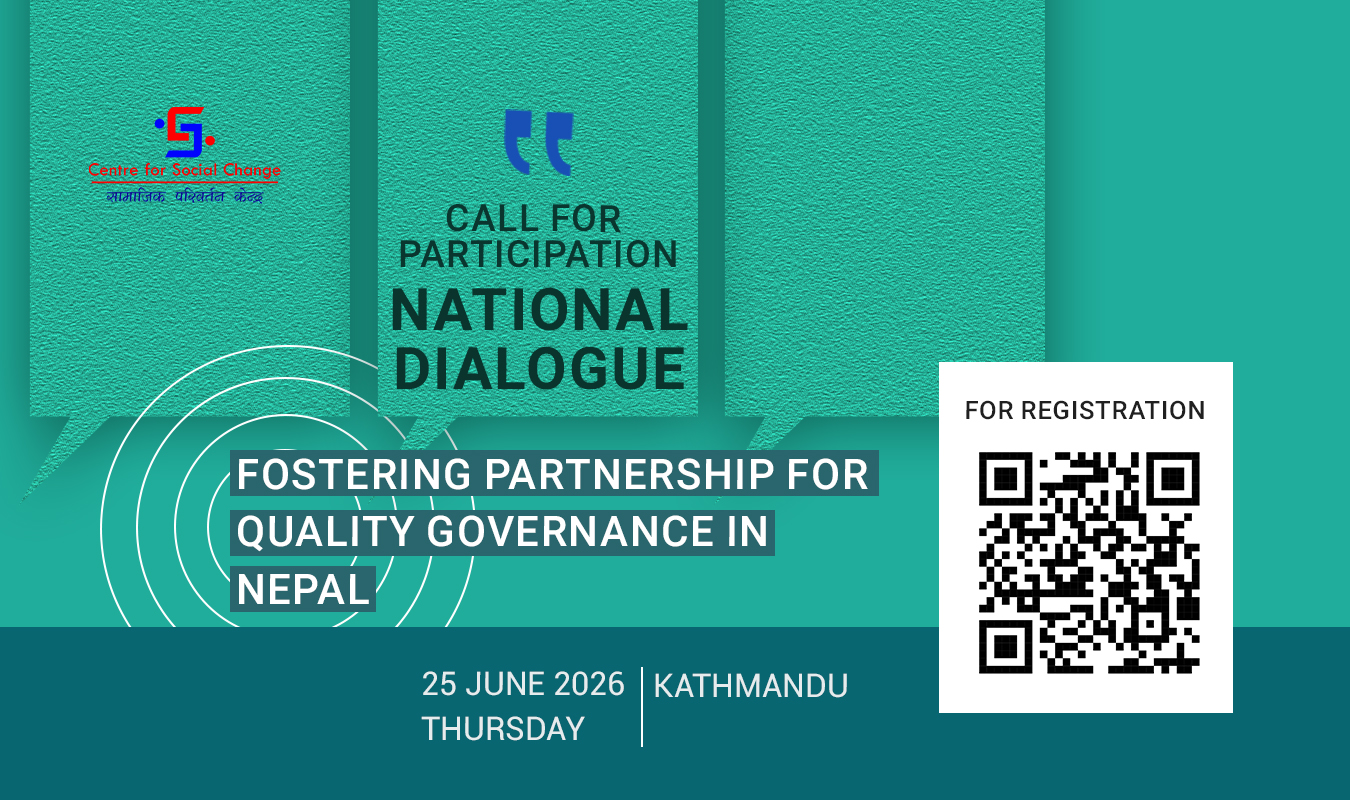
Time: 2:30 PM to 5:30 PM
Date: 25th June 2026 (Thursday)
Registration Deadline : Until 5:00 PM (NPT), Saturday, 20th June
Background
Nepal has entered in the third electoral cycle of implementing federal governance system since the promulgation of Nepal’s Constitution in 2015. While the Constitution envisions an inclusive, accountable, participatory, and citizen-centered system of governance, translating these constitutional principles into practice continues to be a challenge. Federalism has created significant opportunities for the decentralization of state power, improved service delivery, and greater citizen participation in decision-making processes. However, challenges related to coordination among different levels of government, effective public service delivery, citizen trust, and the implementation of development priorities have raised serious questions regarding the effectiveness, and even the relevance of provincial governments and institutions.
In the current context, an important question is, how can federalism be made effective in ways that are tangibly experienced by citizens in their daily lives? Ensuring quality governance requires collaboration and partnership among the state, civil society, the private sector, media, academic institutions, and citizens. Such partnerships can help make policy formulation and implementation processes more accountable, transparent, and results-oriented, while also strengthening trust between citizens and the state.
Against this backdrop, Centre for Social Change (CSC) is organizing a National Dialogue on “Fostering Partnerships for Quality Governance in Nepal” to create a platform for discussion and dialogue on the partnerships, collaboration, and shared commitments necessary for promoting quality governance in Nepal.
The dialogue aims to bring together representatives from government agencies, civil society organizations, the private sector, media, youth groups, and other stakeholders at the provincial level to engage in collective discussions on the current state of governance, emerging challenges, opportunities, untapped potentials, and areas for partnership within Nepal’s evolving federal context. Furthermore, the dialogue is expected to create opportunities for multi-stakeholder engagement and shared learning on emerging standards of quality governance, as well as on how partnerships among the state, citizens, and the private sector can be strengthened and made more effective.
The dialogue will serve as a platform for constructive engagement, knowledge sharing, and joint reflection, ultimately contributing to a shared vision for more effective, accountable, and inclusive governance in Nepal.
Role of CSC in Conflict Analysis and Transformation
There remain a genuine lack of research and database, and in-depth analysis on the conflicts that emerge within governance processes of federal Nepal. To address this gap, Centre for Social Change (CSC) has been consistently working in the past few years, carrying out in-depth study and monitoring conflicts related to four key areas of the governance system and process: natural resources, development, political issues, and ethno-cultural issues. CSC identifies the causes of conflicts in these four areas, analyzes the relevant stakeholders, informs concerned actors to support conflict management, facilitates discussions and dialogues, raises awareness and takes initiatives for policy-level solutions.
Furthermore, findings, learnings and knowledge obtained from these activities is continuously disseminated to the public through various forms of publications like study report, infographics, blog articles, etc. through Governance Monitoring Centre (GMC Nepal). GMC Nepal is a monitoring mechanism that aims to deconstruct the existing and potential intergovernmental conflicts as well as conflicts between people and state and share that evidence among key stakeholders responsible in its transformation or resolution mechanisms.
Objectives of the Program:
- To share major findings from GMC Nepal’s initiatives and sensitize relevant stakeholders on the most prominent conflicts emerging within governance processes.
- To build a shared understanding among all stakeholders on what constitutes quality governance.
Key Discussion points intended but not limited to-
- What are some new measures and indicators for assessing the quality of governance beyond traditional governance indicators.
- Some key partnerships approach to reduce conflict across the governance areas and better governance.
